
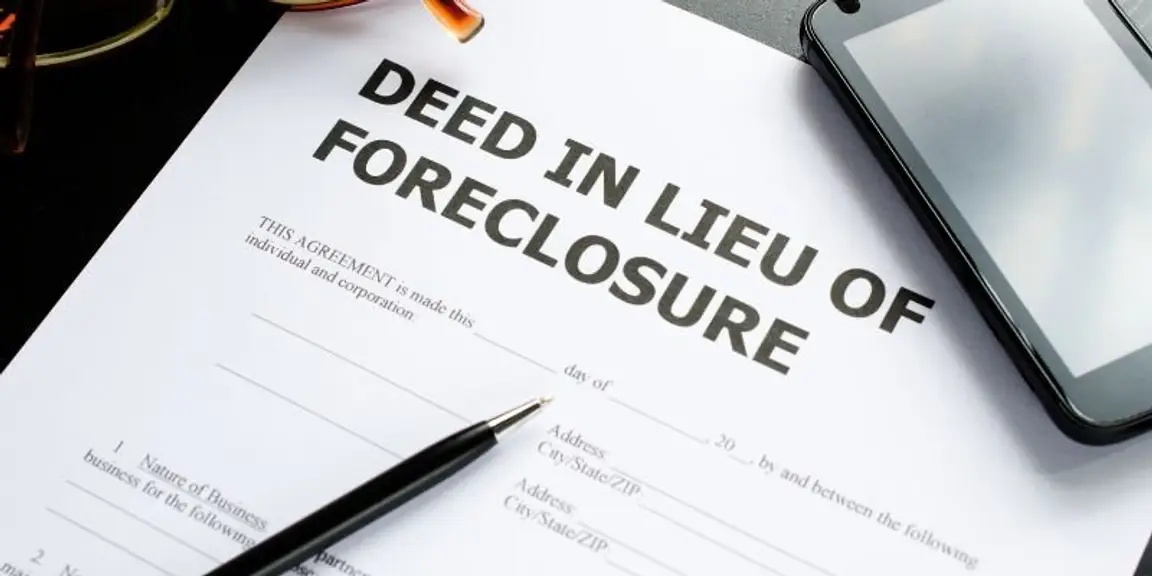

A Carrollton warehouse owner discovered she could walk away from her underwater Property without the public humiliation of a foreclosure sale. Her lender accepted the Deed to her 25,000-square-foot building, and she avoided the six-month legal nightmare that comes with judicial foreclosures (something I’ve watched drag on much longer).
That’s the power of a deed-in-lieu of foreclosure for Texas commercial properties.
What is a Deed in Lieu of Foreclosure in Texas?

By simply transferring the Property back to the lender, the Borrower has the lender cancel the debt. When a commercial loan goes sideways, a deed-in-lieu serves as a structured exit strategy that benefits both parties.
In the traditional sense, a deed-in-lieu of foreclosure is a specialized instrument that transfers Property to a lender in satisfaction of a lien on real Property and in exchange for a complete release. Commercial property owners use this tool when they can’t make loan payments and want to avoid the public spectacle of a foreclosure auction.
Unlike a warranty deed or a quitclaim deed, this conveyance includes specific language regarding debt satisfaction. This Deed is executed and delivered by Grantor and accepted by Grantee instead of Grantee demanding and collecting the Indebtedness and instead of the necessity for Grantee to give notice of default, notice of intent to accelerate, notice of acceleration, notice of posting for foreclosure, and the conducting of a foreclosure sale of the Property.
Texas commercial lenders prefer this route when the property value covers a sufficient portion of the outstanding debt. They acquire the real estate without court costs or the risks of a public auction. You get a clean exit without the credit damage that comes with a full foreclosure process.
People sometimes refer to the process as a “friendly foreclosure” or a “voluntary repossession.” In commercial deals where business relationships often outlast individual transactions, the “friendly” part matters.
When Should Texas Property Owners Consider a Deed-in-Lieu?
You’re three months behind on payments and think the Bank will work with you because you’ve been a loyal customer for eight years. That relationship won’t save you when the loan committee reviews your file.
Commercial lenders care about one thing: getting their money back with minimal hassle. When your property value has dropped below what a deed-in-lieu makes, both parties benefit. Texas saw a 31 percent increase from last month and a 129 percent increase from last year in commercial foreclosures as of March 2024, so you’re definitely not alone in this situation.
Earlier this spring, the Nguyen family was splitting assets in a divorce. They owned a small shopping center outside Abilene that needed major roof repairs. Rather than fight over who would handle the Property, they approached their lender about a deed-in-lieu. The process took six weeks instead of the four to six months a foreclosure would’ve required.
Property owners with foresight consider this option when three conditions align: you can’t make payments, the Property needs expensive repairs you can’t afford, and you want to preserve business relationships in your local market.
A lender who accepts a Deed-in-Lieu of foreclosure can often resolve a situation more quickly and at a lower cost than if they foreclose on a property. When the amount of debt on a property is less than its value, a lender should consider accepting a Deed-in-Lieu of Foreclosure.
Don’t wait until you’re six months behind. Lenders become less flexible as defaults increase, and your negotiating position weakens with each missed payment.
How Do You Qualify for a Deed-in-Lieu of Foreclosure in Texas?
Get this part wrong, and your lender will force you through the full foreclosure process anyway.
But all parties, Lender and Borrower, must agree. The lender must agree to accept the Property, and the Borrower must agree to transfer the Property, return the keys, and vacate the Property. Without this mutual agreement, there can be no valid Deed instead of Foreclosure.
Most Texas lenders require you to prove genuine financial hardship before approving a loan. Job loss, medical emergencies, divorce, or major business setbacks count. “I just don’t want to sail with this anymore” doesn’t qualify.
You’ll need to demonstrate that you’ve exhausted other options. Some lenders require you to have tried to sell the Property for at least 90 days before they’ll consider a deed-in-lieu. In some cases, the lender may require the homeowner to sell the Property before accepting a deed-in-lieu of foreclosure. In these cases, the lender often gives the homeowner a set period, usually around 3 months, to sell the Property.
Your Property can’t have junior liens that would complicate the transfer. A DIL, unlike a foreclosure, doesn’t wipe out subordinate liens or intervening interests. These remain attached to the Property even if the lender accepts a DIL. If you’ve got mechanic’s liens, tax liens, or second mortgages, you need to resolve those issues first.
The lender will order its own appraisal to ensure that accepting your Deed makes financial sense. If your Property is worth more than what you owe, they might push you to sell it rather than return it.
What Are the Main Benefits of Choosing Deed in Lieu Over Foreclosure?
Lenders rarely mention that commercial foreclosures in Texas create public records that follow your business credit for years.
By avoiding bankruptcy or foreclosure, the borrower avoids the negative impact on credit ratings, which is especially helpful for future real estate and investment opportunities. Your personal and business credit reports show “settled” instead of “foreclosed,” which matters when you’re trying to get financing for your next venture.
You need speed in commercial real estate. In Texas, non-judicial foreclosure is faster, often taking 60 to 90 days, while a deed-in-lieu can close in 4 to 6 weeks. That shortened timeline reduces carrying costs and uncertainty for everyone involved.
You can negotiate better terms in a deed-in-lieu than you’d get in a foreclosure—wise borrowers negotiate that prevents lenders from pursuing judgments or reporting to the IRS. A DIL can be useful to a borrower if it avoids the negative consequences of foreclosure, including an adverse credit impact for 7 or more years and the potential for a lender deficiency lawsuit.
The process stays private. Foreclosure auctions happen on courthouse steps, with anyone able to offer. A deed-in-lieu is handled behind closed doors between you and your lender.
Companies like Commercial Property Offer work with property owners throughout Texas who need quick solutions for their underwater commercial properties. If you’re wondering how our process works, understanding your options early can help you avoid costly mistakes and unnecessary delays.
What Risks and Drawbacks Come with Deed-in-Lieu Agreements?
I used to think a deed in lieu was always better than foreclosure until I learned about the tax complications.
For a real estate investor, the IRS consequences of foreclosure may be the worst part of the process. When you transfer property less than what you owe, the IRS might treat the forgiven debt as taxable income, which means you face an immediate tax bill that can be larger than your original loan payments.
Junior liens stick around even after you hand over the deed. DIL, unlike a foreclosure, doesn’t wipe out subordinate liens or intervening interests. These remain attached to the property if the lender accepts a DIL. You could be responsible for mechanics’ liens, tax debts, or other encumbrances that foreclosure would have eliminated.
While a borrower may strongly desire a Deed instead of Foreclosure, they cannot actually force a lender to accept a deed-in-lieu proposal. Borrower Banks reject deed-in-lieu proposals more often than they accept them, especially when they believe they will recover more money through foreclosure.
Your lender might keep the right to foreclose later. Although the title says so, the lender may also retain the right to sell and forebear under the existing deed of trust if it discovers additional title issues.
Some lenders won’t give you a full release from personal guarantees. You could still be liable for the debt, even if you transfer the property.
How Does a Deed in Lieu Work for Commercial Property Owners?
Commercial deed-in-lieu transactions require more documentation than residential ones.
Your lender will want detailed financial statements, tax returns for the past three years, and a hardship letter explaining why you can’t continue making payments. They’ll also order their appraisal and environmental assessment of your property.
The deed granted to benefit the grantee by providing an absolute, present, unconditional, and irrevocable transfer of the property title, rather than foreclosure. The document highlights the importance of recording the deed to provide constructive notice to third parties and to preserve the grantee’s interest against potential claims.
You must provide warranties about the property condition, environmental compliance, and tenant leases to commercial lenders. A well-drafted deed, instead of foreclosure, will (i) include representations and warranties by the debtor that there are no liens affecting the property and (ii) include a bank lease in favor of the Bank for any alleged lender liability claims.
The deed’s special provisions specify Bank language to prevent the merger of the mortgage lien with the property title. It includes provisions to prevent the merger of the deed of trust lien with the fee simple title, maintaining the lien’s validity and priority. Undisclosed liens discovered later cannot compromise the lender’s rights due to this protection.
Most commercial deed-in-lieu agreements include settlement documents that define what each party gives up and what they receive in return. These can include non-disclosure agreements and mutual releases from future claims.
What Documents and Paperwork Are Required for a Deed-in-Lieu?
Too much paperwork for a simple property transfer,” skeptical sellers tell me regularly.
The complexity protects both sides in a transaction where millions of dollars might be at stake.
A copy of the Promissory Note and Deed of Trust, which was signed by the Borrower and which is being canceled, will be described in the Deed instead of Foreclosure. You’ll need to reference the original loan documents precisely to make the transfer legally binding.
A DIL is usually accomplished through a special warranty deed, but a deed without warranties may also be used. The instrument should contain specific statements and recitals if it is to have the desired effect.
Your lender will require current financial statements, profit and loss statements for the past two years, and documentation of any hardship that prevents you from making payments. Environmental reports, property condition assessments, and current rent rolls are standard requirements for commercial properties.
The title work must be current, usually within 30 days of closing. The document also addresses the need to obtain an owner’s title insurance policy to protect the lender’s interest in the property. Your lender wants to make sure they’re getting a clear title, free of surprises.
Settlement agreements, mutual releases, and sometimes estoppel certificates from tenants round out the document package. Professional property companies like Commercial Property Offer can help Texas property owners navigate these requirements.
How Long Does the Deed-in-Lieu Process Take in Texas?

How fast can I get the deed-in-lieu done? A Fort Worth owner of an office building believed her deed-in-lieu would close in two weeks. Six months later, environmental issues were still holding up the transfer.
Commercial deed-in-lieu transactions typically take 45 days to several months in Texas, assuming no major complications. Residential sales move faster, but commercial properties need more due diligence.
The timeline starts when you submit your hardship package to your lender. Most banks take 30 to 45 days to review your financials and decide whether to proceed, ordering their own appraisal and possibly an environmental assessment during this period.
Once approved, the documentation phase takes another 30 to 60 days. A Deed-in-Lieu of Foreclosure is a complex document that a lawyer should prepare. Commercial attorneys need time to negotiate settlement terms and prepare the transfer documents.
Environmental issues can delay the process by months. If your lender discovers contamination or compliance problems, they’ll require remediation before executing the deed. Title problems, tenant issues, or disputes over property condition can create similar delays.
Smart property owners start the conversation with their lender as soon as they know they’re in trouble, not after they’ve already missed multiple payments. Earlier discussions give you more time to work through complications.
Can You Negotiate Better Terms in a Deed-in-Lieu Agreement?
$2.3 million was what the Richardson shopping center owner owed when he negotiated his deed-in-lieu agreement.
Everything is negotiable in commercial real estate, including how you exit a bad sale.
Lenders will usually agree to waive deficiency claims if the property value covers at least 70 to 80 percent of the outstanding debt. Depending on the guaranty agreements, a borrower may also benefit financially, particularly if the property’s value is high and the borrower is willing to negotiate with the lender. For example, a Borrower might negotiate to prevent the lender from suing the Borrower.
You can negotiate timing that works for your business. Some lenders will let you use the property for a short period after the deed transfer to help you relocate operations or find alternative space.
Cash contributions to close the gap between property value and loan balance can sometimes make a sale work. If you owe $800, your property appraises for $650,000, offering $50,000 cash might convince your lender to deed the deed and release you from the remaining $100,000.
Tax consequences can be negotiated, too. Smart borrowers ask lenders not to report forgiven debt to the IRS, though this depends on the bank’s policies and the size of the debt forgiveness.
You can negotiate reBank’s guarantees when you’re transferring property that secures the debt, but you need the strongest negotiating position.
Working with experienced professionals like Commercial Property Offer can help identify negotiation opportunities you might miss on your own.
What Happens to Your Credit Score After a Deed-in-Lieu?
Your credit report won’t look perfect, but it won’t be destroyed either.
Most credit scoring models treat a deed-in-lieu more favorably than a foreclosure. Instead of showing “foreclosed” on your credit history, the account typically shows as “settled” or “paid through deed in lieu.” That matters when you apply for future business financing.
Your credit score before the deed-in-lieu determines the impact. Property owners with scores above 720 might drop 100 to 150 points initially, while those with lower scores see smaller drops because their credit was already compromised.
Commercial credit recovery happens faster than most people expect. Business owners who maintain other accounts in good standing typically see their scores rebound within 18 to 24 months. Personal credit usually takes 3 to 4 years to recover fully.
Keep your other accounts up to date during and after the process. Late payments on credit cards or other loans compound the credit damage caused by the deed-in-lieu.
Some lenders will agree in writing not to report the deed-in-lieu as a negative mark, especially when the property is worth close to the loan balance. This negotiation point gets overlooked in most deed-in-lieu discussions.
Future lenders care more about your current income and assets than they do about a single deed in lieu from years past. Commercial real estate is a relationship business, and most lenders understand that sales go bad for reasons beyond the borrower’s control.
What Tax Consequences Follow a Deed-in-Lieu Transaction? Borrower’s
“Will I owe taxes on the forgiven debt?” is the question every property owner asks.
That could be a large amount, and the borrower must treat it as ordinary income in a single year (unless the property is the borrower’s homestead). Commercial properties don’t qualify for the homestead exemption, so you could face immediate tax liability on any debt forgiven
When you transfer property worth less than your loan balance, the IRS generally treats the difference as taxable income. A property worth $600,000 used to satisfy a $900,000 debt creates $300,000 of potential taxable income.
Depreciation recapture adds another layer of tax complexity. If you’ve claimed depreciation deductions over the years, the IRS wants some of that property you transfer. Real estate investors feel this impact harder than owner-users.
Insolvency exceptions might apply if your total debts exceed your total assets at the time of the deed transfer. You’ll need detailed financial statements and possibly professional tax advice to claim this exception properly.
Some deed-in-lieu agreements include provisions in which the lender agrees not to issue a 1099-C form for debt forgiveness, creating indebtedness that is fully paid without forgiveness of debt, and that the indebtedness is fully released. The language treats the property transfer as a Borrower in full rather than debt forgiveness.
Professional tax advice is worth the cost when you’re dealing with commercial properties worth hundreds of thousands or millions of dollars.
How Does Texas Law Regulate Deed-in-Lieu Agreements?
When taking a deed instead of foreclosure in Texas, the most important statute the lender/mortgagee needs to be aware of is Tex. Prop. Code § 51.006. This section grants lenders the right to foreclose later if they discover undisclosed liens.
While Texas law does not provide specific statutory guidelines for drafting a Deed instead of Foreclosure, the format follows that of a general warranty deed or a special warranty deed. This flexibility lets lenders and borrowers customize agreements for specific situations.
The Texas Property Code provides that a mortgage holder, such as the Bank, may void a deed in lieu before the fourth anniversary of the Bank’s conveyance if the Bank’s debtor fails to disclose the existence of a lien on the property at the time of the conveyance and the mortgage holder did not know of the undisclosed lien.
Texas follows the common law merger doctrine, but with important exceptions for lenders. The common law doctrine of merger provides that when a greater estate in land and a lesser estate are combined in a single person, the lesser estate is extinguished and merged into the greater estate. The intention of the parties qualifies this doctrine, and it is presumed that the mortgage holder intended to keep the lien and title estates separate if needed to protect the mortgage holder’s priority over junior liens.
Recording requirements follow standard Texas real estate law. The deed must be properly notarized, include accurate legal descriptions, and be filed with the county clerk where the property is located. Most lenders want title insurance policies updated to reflect their ownership after the transfer.
Consumer protection laws don’t apply to commercial deed-in-lieu transactions, giving sophisticated parties greater freedom to negotiate terms that suit their specific situations.
What Alternatives Exist Besides Deed-in-Lieu and Foreclosure?

Henry Brennan got a job transfer near Killeen and had five weeks to be out. His strip center was hemorrhaging money with three vacant units and a roof that leaked every Thursday when it rained. He’d been carrying the proper property for two years, hoping the market would turn around, but the transfer forced his hand (I’ve seen this exact scenario play out).
Short sales let you sell the property for less than the loan balance with your lender’s approval. This works when you can find a buyer quickly and your lender agrees to take a loss rather than foreclose. Some owners also explore options to sell your house fast for cash in Alabama when maintaining the property or negotiating with lenders is no longer practical.
Loan modifications can reduce your payment or extend your loan term. Commercial lenders are less willing to modify loans than residential lenders, but they’ll consider them when the alternative is losing money through foreclosure.
Assumption agreements let another buyer take over your loan payments. This requires lender approval and usually works only when the new borrower has stronger credit than you do.
Workout agreement: Borrower has time to cure the default in exchange for additional collateral or personal guarantees. These work for short-term cash flow problems rather than fundamental business failures.
Cash-for-keys agreements let you negotiate a payment from your lender in exchange for voluntarily transferring the property. Property Smart lenders would rather pay you $10,000 to leave than spend significantly more on legal fees and carrying costs.
Companies like Commercial Property Offer specialize in quick closings for Texas commercial properties and, sometimes, deliver better outcomes than traditional loan workouts. Working with experienced cash home buyers in Texas may provide an alternative solution before foreclosure proceedings advance further.
Partnership buyouts work when multiple owners want alternatives. One partner might buy out the others and keep the property while the others walk away clean.
Frequently Asked Questions
What Is a Deed in Lieu in Commercial Real Estate?
A deed in lieu is a voluntary agreement where you transfer your commercial property to the lender to satisfy your mortgage debt instead of going through foreclosure. The lender accepts the property’s payment and typically releases you from further liability on the loan. This process helps you avoid the public auction and potential deficiency judgments that come with traditional foreclosure proceedings.
What Does a Commercial Loan Look Like?
A commercial letter of intent typically includes the purchase price, the amount of the earnest money, financing terms, the due diligence period, and major transaction contingencies. LOIs also specify the closing date, include fixtures and equipment, and how expenses, such as taxes and insurance, are prorated. Most commercial LOIs range from two to five pages and serve as the foundation for the formal purchase agreement.
What Is a Major Disadvantage to Lenders of Accepting a Deed in Lieu?
Lenders inherit all the property’s problems when they accept a deed-in-lieu, including environmental issues, deferred maintenance, and tenant issues. Junior liens also remain attached to the property since foreclosure doesn’t clear them. The lender becomes responsible for property taxes, insurance, and ongoing maintenance costs while the properties are being resold.
If you’re struggling with commercial property payments in Texas and want to explore your options, we’re here to help. Reach out to us to discuss your situation and learn which solution may best fit your property and financial goals. We’ve worked with hundreds of property owners facing similar challenges throughout Dallas, Houston, San Antonio, and Austin. Give us a call to discuss whether a deed-in-lieu, quick sale, or another solution might work for your situation. No pressure, just honest advice about your next steps.
Helpful Texas Blog Articles
- How to Sell an Apartment Complex That Is Condemned in Texas
- How to Sell Self Storage with a Partnership Dispute in Texas
- How to Sell Self Storage That is Condemned in Texas
- How to Sell Apartment Complex That with Fire Damage in Texas
- How to Sell a Self-Storage Complex with Eviction in Texas
- How to Sell a Warehouse with Lis Pendens in Texas
- Stop Foreclosure in Texas
- Deed in Lieu for Commercial Property
- Texas Commercial Property Sale Documents Checklist
- Commercial Property Appraisal in Texas
- Can You Sell a Commercial Property with a Mortgage in Texas
- Commercial Appraisal Required Repairs in Texas