
![Letters Of Intent In Commercial Real Estate [market_city]](https://image-cdn.carrot.com/eyJidWNrZXQiOiJwcm9kdWN0aW9uLmNhcnJvdC11cGxvYWRzLm9uY2Fycm90LmNvbSIsImtleSI6InVwbG9hZHMvc2l0ZXMvNzgzNTMvMjAyNi8wOC9MZXR0ZXJzLU9mLUludGVudC1Jbi1Db21tZXJjaWFsLVJlYWwtRXN0YXRlLTEucG5nIiwiZWRpdHMiOnsicmVzaXplIjp7IndpZHRoIjoxMTUyfSwidG9Gb3JtYXQiOiJ3ZWJwIiwid2VicCI6eyJxdWFsaXR5Ijo3MH19fQ==)

A seller in Tucson called me about a retail strip she’d owned for eleven years. She’d shaken hands with a buyer, celebrated over dinner, and told her accountant the sale was done. Three weeks later, the buyer walked. Nothing was signed. That gut-punch lands on owners far more often than it should, and a properly structured letter of intent in commercial real estate is usually the one thing that prevents it.
What Is a Letter of Intent in Commercial Real Estate?
Not long ago, I worked with a family in Boise, Idaho, who inherited a small mixed-use building. They toured the property with a prospective buyer on a Tuesday afternoon, talked numbers in the parking lot, and drove home assuming they had an agreement. By Monday, the buyer had moved on to a cheaper property across town. Nothing on paper held anyone to anything.
A letter of intent is a preliminary document that lays out proposed terms between parties before either side commits to a legally binding lease or purchase contract. Think of it as the handshake in writing, the version that actually means something. It covers the big commercial items: proposed purchase price or rent, the length of any lease term, contingencies, and who pays for what during due diligence. Most LOIs are non-binding. They still align real estate, legal, and finance teams early in the negotiation, and they become the skeleton of the formal agreement that follows.
For buyers investing in commercial property, a Letter of Intent (LOI) signals serious interest and gives the seller a clearer idea of the proposed sale. Sellers benefit from that commitment too. Once the terms are put in writing, there is a concrete starting point for negotiations, even though an LOI may not always be legally binding. If your goal is to sell your commercial property fast in Texas, understanding the LOI before signing can help you avoid agreeing to terms that create problems later. Companies experienced in commercial property transactions can walk sellers through the proposed price, contingencies, timelines, and other important conditions. In many cases, getting that guidance earlier can prevent misunderstandings and keep the transaction moving toward closing.
When Do You Use a Letter of Intent for Commercial Property?
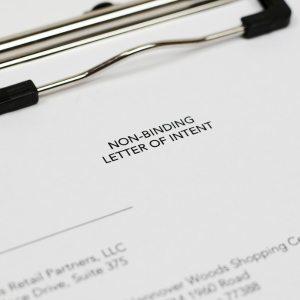
Skip the LOI, and you risk months of negotiation before you find out the buyer had entirely different expectations about price, contingencies, or the lease agreement structure. Misalignment like that burns time and money on both sides. It also poisons transactions that could’ve closed.
LOIs get used for both the purchase of commercial real estate and the lease of commercial property, and they’re usually drafted whenever negotiations look messy. That covers most commercial transactions. Think of multi-tenant office buildings, retail centers with sitting tenants, or an industrial warehouse carrying an environmental history that can stall a closing for months. Each one has layers that need settling in principle before attorneys start drafting the formal purchase agreement.
In practice, a prospective tenant might sign an LOI outlining rental terms before committing to a long-term lease. Buyers and sellers use LOIs to agree on basic terms before anyone drafts a purchase agreement. Developers use them to lock in land or partner agreements ahead of detailed project proposals. The common thread is complexity. Any time a transaction gets complicated enough that both sides need to confirm they’re negotiating the same thing, an LOI earns its keep.
Who Prepares a Letter of Intent in a Commercial Real Estate Sale?
It depends on whether you’re buying or leasing, and on who holds the stronger negotiating position.
Brokers usually draft the first version of the LOI, especially in lease negotiations where landlords want speed and tenants need their interests spelled out. In purchase transactions, buyers’ attorneys often handle the LOI from the start, especially where serious money or existing tenants are involved. A seller can draft their own LOI too. That happens most often when several buyers are circling, and the seller wants to control the terms of the conversation. I’ve watched it shift an entire negotiation.
Whoever writes the first draft of the LOI quietly frames everything that follows, and most sellers never see it coming. The side that puts language on paper first anchors the discussion, so handing over that first draft without a fight is a real concession. Involve your attorney or a trusted advisor early. If you’re selling a commercial property and you’re unsure where to start, talking to our team at Commercial Property Offer before you respond to any LOI can save you from terms you’ll regret later.
What Should a Commercial Real Estate Letter of Intent Include?

Once you know who’s drafting, you need to know what belongs inside.
A solid LOI describes the property clearly: address, parcel number, and a short summary of what’s being conveyed. It names buyer and seller, states the proposed purchase price or rent, identifies the lease term where one applies, and spells out any contingencies. Financing contingencies, inspection rights, and environmental review windows all belong here, and those environmental windows run tighter than most owners expect. Lease transactions add rent structure, tenant improvement allowance, operating expenses, renewal options, and termination rights.
Confidentiality provisions show up as a binding carve-out even when the rest of the LOI isn’t binding. Exclusivity periods work the same way, and they stop the seller from shopping the property to other buyers while the current buyer finishes due diligence. Leave either one out, and a competing offer surfacing mid-negotiation can cost you real money.
One line owners skip: the LOI’s own expiration date. Give the other side an open-ended window to sign, and you’ve handed them a free option on your property, the same way an undefined due diligence period does. Keep the LOI short while you’re at it. Two or three pages cover the economics without dragging every warranty into a document that doesn’t bind anyone anyway.
Is a Letter of Intent Legally Binding in Commercial Real Estate?
Plenty of sellers hear non-binding and file the LOI under formality. That assumption gets people hurt.
A letter of intent is generally non-binding, though it can carry binding provisions like confidentiality or exclusivity, and those sections have teeth if you violate them. Courts have also looked at how the parties behaved after signing and found an implied duty of good-faith dealing, even where the document announced itself as non-binding.
Label the binding sections plainly. A short paragraph naming which provisions bind the parties and which ones don’t will protect you better than careful drafting anywhere else in the LOI.
Say a seller starts turning away other buyers, pulls the property off the market, and runs up legal fees on the strength of a signed LOI. That seller is exposed if the document wasn’t structured carefully. Attorneys who work in commercial real estate transactions regularly can tell an LOI that provides real protection from one that reads like a wishlist, and the distinction is worth the fee. Don’t treat this document as a handshake with extra steps.
How Is a Letter of Intent Different From a Purchase Agreement?

A letter of intent is the framework. The purchase agreement is the legally binding contract. Once an LOI is signed, attorneys on both sides use it as a blueprint for the formal purchase agreement, which carries the representations, warranties, indemnifications, and closing conditions that bind the parties at law. Jumping straight to a purchase agreement can work. It’s slow and expensive, though, because you’re paying attorneys to argue points a two-page LOI could’ve roughed out first.
Formal timelines start with the purchase agreement, not the LOI. Once you’re under a binding contract, due diligence deadlines run. Commercial real estate transactions often allow 30 to 90 days for that work. Knowing where you sit in the sequence, LOI stage or contract stage, tells you what rights you hold and what obligations you’ve already accepted.
What Happens After a Letter of Intent Is Signed?
A commercial real estate sale runs roughly 60 to 120 days from accepted offer to closing, and a serious chunk goes to due diligence right after the letter of intent is executed. Your buyer will order inspections, read every existing lease agreement, examine the title, check zoning compliance, and often commission an environmental report. Have your financial records, rent roll, and property tax documents organized and ready. Buyers who chase paperwork get nervous, and nervous buyers either re-trade the price or walk.
This stretch is also when attorneys translate the LOI’s framework into the formal purchase agreement. Every gap or loose end you left in the LOI gets renegotiated now, usually at the seller’s expense. That’s the whole argument for spending an extra week on the letter of intent instead of rushing to sign it.
Sellers often wonder how long the letter of intent stage will take. For a straightforward commercial property sale, a week or two of negotiation is fairly typical, while sales involving multiple tenants, financing requirements, or lenders can take longer. That time is usually well spent because resolving key terms early can prevent bigger issues later. Every detail you settle in the LOI is one less issue for your attorney to negotiate during due diligence. If you’re looking to sell, we buy commercial properties in different parts of the U.S. and can help you explore a direct sale without the drawn-out process of a traditional transaction.
Common Mistakes to Avoid in a Commercial Real Estate Letter of Intent
Moody’s Analytics put the national office vacancy rate at 21% in the first quarter of 2026, a record high. Buyers in plenty of markets have real options. A seller who lets sloppy terms slide in the LOI is handing that buyer ammunition to renegotiate later, once the seller has less leverage.
A woman I worked with in Fort Collins, Colorado, was settling her late father’s estate. She’d inherited a small office building and was managing it from two states away when a job transfer gave her five weeks to relocate. A buyer had already expressed interest. The letter of intent he presented carried no exclusivity provision and a vague due diligence window. She nearly signed it as-is because she felt out of time. We slowed down long enough to fix those two terms, and that fix protected her when the buyer tried to stretch the timeline. Owners who need to sell commercial property in Colorado run into that same squeeze more often than you’d think.
The mistakes I see most often begin with an undefined exclusivity period, giving the buyer too much time to extend due diligence while the seller misses opportunities to consider other offers. Another common issue is failing to clearly explain what happens to the earnest money if the buyer backs out, along with treating confidentiality provisions as an afterthought. Sellers may also agree to a purchase price without clearly tying it to the property’s condition, only to face a price reduction request once the inspection uncovers issues.
If you want a second set of eyes on your LOI before responding, make sure you understand the terms that could affect your timeline, leverage, and final proceeds. Commercial Property Offer buys commercial property for cash, giving owners another option when they want a straightforward sale without the uncertainty of a prolonged process. Contact us today to discuss your commercial property and learn more about your options.
Frequently Asked Questions
What Is the 3-3-3 Rule in Real Estate?
The 3-3-3 rule is an informal homebuying guideline, not a commercial real estate standard, and not a legal requirement. The common version: keep three months of living expenses in savings, set aside three months of housing costs on top of that, and compare at least three similar properties before you make an offer. Wording varies by source, and no regulator or trade body enforces it. On a commercial property, the timeline that actually governs you is the due diligence window written into your contract.
Can a Seller Back Out of an LOI?
Usually yes, since most letters of intent bind neither side. A seller can walk without a legal penalty, particularly where the LOI carries a clear non-binding clause. The exception is a binding provision buried inside the document. An exclusivity agreement, for instance, can restrict the seller’s ability to walk away or market the property to other buyers for a defined period.
How Enforceable Is a Letter of Intent?
That depends entirely on how the document is written. The non-binding portions carry no legal obligation to complete the sale. Specific provisions like confidentiality clauses and exclusivity periods can be fully enforceable in court. Some courts have gone further and held parties to an implied duty of good-faith negotiation based on a signed LOI, even where the document called itself non-binding. Have your real estate attorney read the language before you sign anything.
What Are the Risks of Signing an LOI?
Sign before you understand the terms, and you can lock yourself into an exclusivity window that shuts out better offers. Ambiguity about price adjustments, due diligence scope, or termination rights won’t stay buried either. Those gaps resurface as costly fights during the formal contract phase. Sellers also spend time and legal fees preparing for a transaction that the buyer can still abandon, because an LOI guarantees nothing about closing.
An LOI may have just landed in your inbox, and you’re trying to make sense of it. Or you’re a commercial property owner thinking about selling, and you want to understand how the process works before anyone puts paper in front of you. Either way, feel free to reach out to Commercial Property Offer. No pressure, no obligation. Just a straight conversation about where you stand and what your options are.
Helpful Blog Post Articles